How Garage Door Tracks Work: Vertical, Curved, and Horizontal Sections
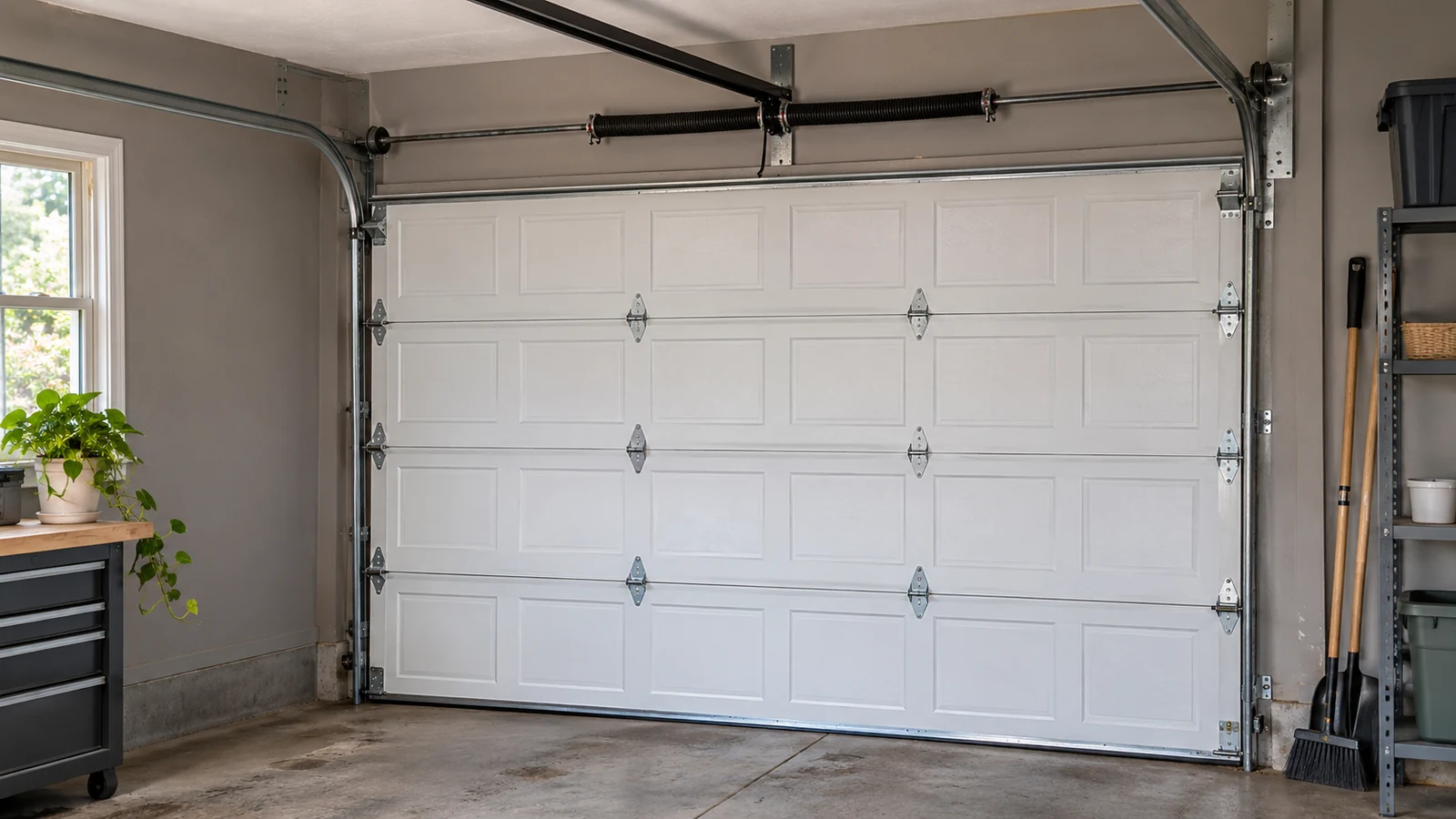
Garage door tracks are the metal channels on each side of a sectional door that guide its rollers. They rise vertically beside the opening, turn through a curved section, and continue horizontally into the garage. The tracks guide the door, while springs and cables carry its weight. A bent, loose, or misaligned track is a professional repair. As of November 2026, Angi puts track repair or replacement at about $125 to $400.
This page is part of the larger garage door repair guide, which covers symptoms, causes, and repair types.
When to call a pro. If a roller is out of its track, the door is crooked, or a track looks bent or pulled from the wall, stop using the door and keep clear. Do not push a roller back, straighten a track, or loosen any fastener. The door is loaded, and a part can move suddenly.
Contents
- The path from floor to ceiling
- Rollers, hinges, and brackets
- Why the curve and the supports matter
- Tracks versus the opener rail
- Symptoms that point to a track problem
- Repair or replacement
- What track work costs
- What to keep after service
- Quick checklist
- In this guide cluster
- DIY or pro
- Where these figures come from
- FAQ
- Next step
The path from floor to ceiling
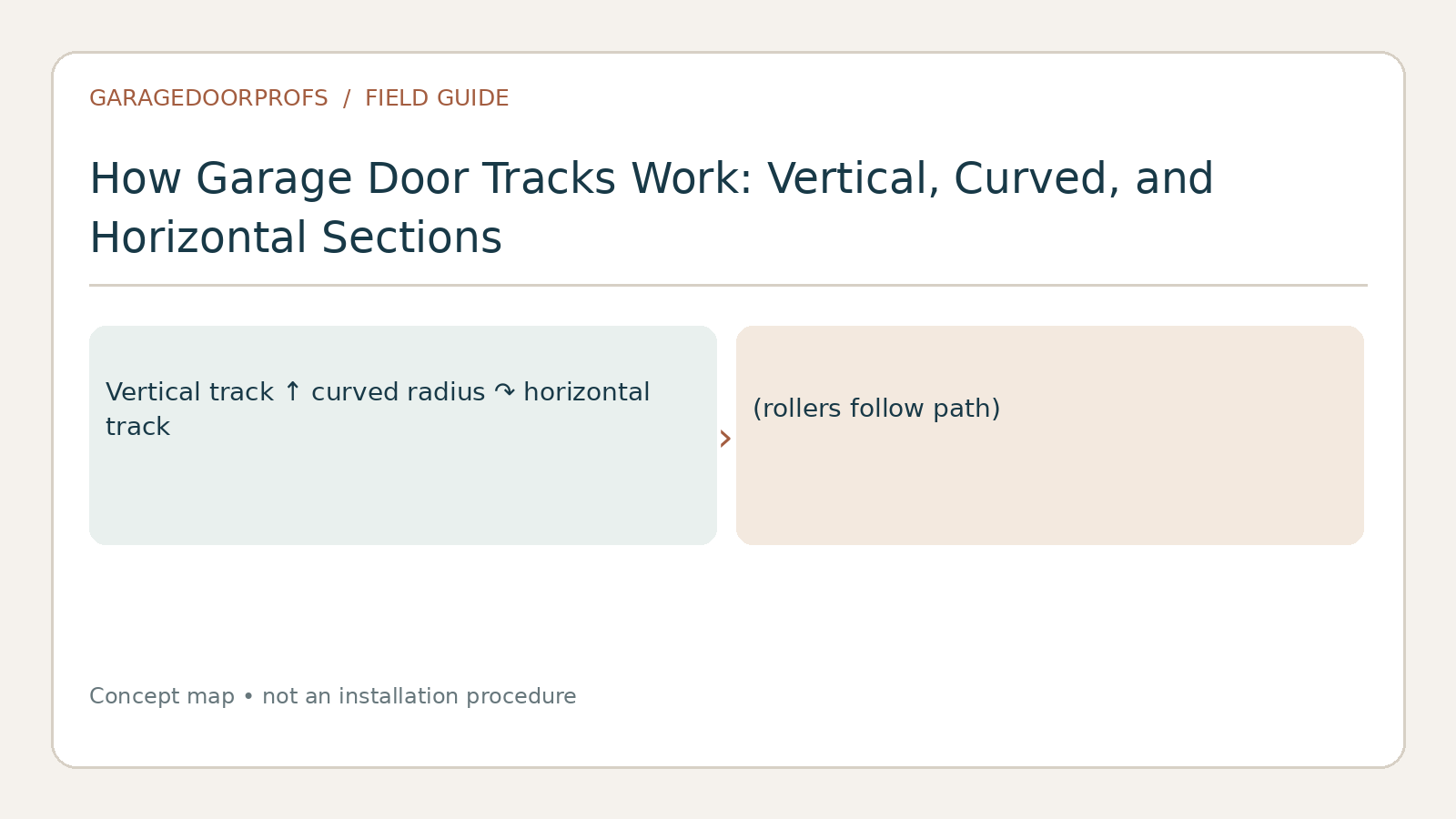
On a common sectional door, the track has three parts:
| Section | Where it is | What it does |
|---|---|---|
| Vertical | Runs up the side of the opening | Keeps the door in line as it starts to rise |
| Curved (radius) | Bends overhead | Turns the door from vertical to horizontal |
| Horizontal | Runs back along the ceiling | Holds the door overhead when open |
The door’s rollers ride in these tracks. Some doors use low-headroom, high-lift, or other layouts that change the shape and the space needed, so a simple “vertical, curve, horizontal” sketch is a model, not an installation drawing. The exact geometry and supports differ from door to door.
Tracks are commonly made in standard widths, matched to the size of the rollers. Do not assume similar-looking tracks and rollers are interchangeable. The door maker’s documentation says what fits your door. DASMA publishes a sectional door terminology sheet (TDS160) that names each component, which is handy when describing a problem to a technician.
Rollers, hinges, and brackets
Rollers attach to the sections through hinges or brackets and move inside the track. Their construction, stem length, and profile must fit the door and track. A roller that looks right in a store may not match your system, so the installer should check the part specification before replacing anything. The roller replacement guide, the nylon vs steel roller comparison, and the roller size guide go deeper.
The bottom fixtures at each side of the door also connect to the lift cables on many designs. They are subject to the full force of the counterbalance, so they are not ordinary hardware. A missing roller, a loose cable, or a bracket pulling away is a stop-use sign. Do not loosen a track to let a roller slip back in, and do not try to reseat a tilted door.
Why the curve and the supports matter
The curve changes the direction of the moving sections. Its radius and position must suit the door’s hardware and the headroom you have. The horizontal tracks hang from supports, and the building structure has to carry the door as designed. A bent transition or a loose support can cause binding at the same point of travel every time.
From a safe position, note where movement changes and whether the problem began after an impact or installation. Photograph the area without standing under a door that is part open. A technician can inspect alignment, fastening, roller fit, and related hardware. Do not straighten a track with tools while a door is loaded in it.
Tracks versus the opener rail
The side tracks guide the door’s rollers. The ceiling rail is part of the opener, and it guides a trolley that pulls the door through an arm. They have similar names and different jobs. An opener can run perfectly while a track or roller blocks the door.
When you describe a problem, say which one you mean, and note the sound and the point in the travel. The opener rail maintenance guide covers the rail, and the track cleaning guide explains why cleaning is usually better than adding grease to door tracks.
Symptoms that point to a track problem
| What you notice | What it may mean | What to do |
|---|---|---|
| Shaking or rubbing during travel | Dirt, a worn roller, or a misaligned track | Stop; describe where it happens |
| A repeated stop at one spot | A bend or obstruction at that point | Do not run the opener again and again |
| A tilted lower edge | A roller out of its track or a cable fault | Keep clear and call a pro |
| A gap between roller and track | Displacement or wear | Call a pro |
| A track pulled from the wall | A loose support or impact damage | Stop use; call a pro |
| A door that jams after a vehicle bump | Damage to track, panel, or framing | Keep the door out of use; request an assessment |
The same symptom can have several causes, including panel or hinge damage and counterbalance faults. Do not run the opener repeatedly to work through the spot, since extra motor force is not a track repair. If a door is off its track or suspended unevenly, keep the opening clear and call for service. Do not pull the emergency release on a damaged door.
Repair or replacement
A technician may find a damaged section, loose mounting, an incompatible track, or a problem elsewhere that only looks like a track fault. Ask the estimate to name:
- The affected section and the replacement part
- Supporting hardware and fasteners
- Labor, any service fee, and the tests performed afterward
A replacement track must fit the door, the rollers, and the lift layout. An old track is not automatically suitable for a new door. The track repair guide covers bent sections and replacement options, and the track replacement guide explains what determines compatibility. If you are installing a new door, read about reusing old tracks.
After an impact, ask whether the door sections and framing also need checking. If the structure is damaged, bending one segment back does not make the door safe. Ask for the underlying diagnosis and why the repair fits the manufacturer’s instructions. Compare the full scope, not the price of a metal channel.
What track work costs
As of November 2026, Angi’s repair cost guide lists track repair or replacement at about $125 to $400, rollers at about $90 to $200, and a panel at about $150 to $1,000. Other guides give a similar track range, and Modernize lists track replacement at $125 to $300. The service call is typically $50 to $150, with after-hours calls adding about 25 to 50 percent.
Your quote can run higher if the door has come off its track, a cable or spring is also damaged, or panels were bent in the process. Fixing several parts in one visit can cost less than separate appointments, but each part should be listed. See the track repair cost guide and the roller replacement cost guide for more.
What to keep after service
Save the invoice, the part names or model numbers, your notes on door and opener travel, and any warranty. Ask the technician to show the repaired area from a safe location and demonstrate normal operation and the opener’s safety checks, per its manual. If the door still binds at the same spot, report it before you sign off.
Keep your own routine limited to the manual’s instructions on a sound door. Report new rubbing, crooked movement, or impacts promptly. Never adjust brackets, cable fixtures, or spring hardware to improve a track symptom, since a change to one part can affect another.
Quick checklist
- You know the three track sections and that the opener rail is separate.
- You noticed where in the travel the problem occurs.
- You stopped using the door if a roller left the track or the door tilted.
- You photographed from a safe position, not under the door.
- The estimate names the affected section, part, labor, and tests.
- You asked whether panels and framing need checking after an impact.
- You kept the invoice and warranty.
In this guide cluster
- Garage door roller replacement: what homeowners should know.
- Garage door track repair: bent sections and replacement options.
- Nylon vs steel rollers: how the two compare.
- Garage door roller sizes: stem length and track compatibility.
- Garage door track replacement: what determines compatibility.
- Cleaning garage door tracks: cleaning without adding grease.
- Reusing old tracks with a new door: when it can and cannot work.
DIY or pro
You can observe, take photos from a safe distance, clean accessible track dirt as your manual directs, and describe the symptom accurately. A technician should handle any track alignment, replacement, or roller work that involves the loaded door.
Safety box. Do not reach into the track, push a roller back, loosen a bracket, or straighten a bent track. Do not stand under a door that is part open, and do not use the emergency release on a damaged door. Keep children and pets clear.
Where these figures come from
Prices were compiled in November 2026 from published national cost guides, including Angi’s repair cost guide and Modernize’s repair cost guide, and are not local quotes. Component terminology follows DASMA’s sectional door terminology sheet (TDS160), and safety references come from DASMA’s homeowner safety tips. Get local written quotes before you decide.
FAQ
What are the three track sections?
On a common sectional door, vertical tracks stand beside the opening, curved sections turn the path overhead, and horizontal tracks carry the door into the garage. Other lift layouts differ, so use the exact door’s drawings for the precise arrangement.
Is the opener rail the same as a door track?
No. Side tracks guide the door’s rollers. A ceiling rail guides the opener’s trolley, which moves the door through an arm. A problem in either can affect travel, so tell the technician where it happens, what you hear, and how the door moves.
Can I push a roller back into the track?
Do not attempt it on a loaded or crooked door. Track, cable, spring, and bracket forces can make the door move without warning. Stop using it, keep clear, and have a technician inspect the cause and restore compatible parts and alignment.
Can a new door use the old tracks?
Only if compatibility is confirmed for the actual door, rollers, lift type, and the maker’s requirements. A matching width alone is not enough. Ask the installer to document any proposed reuse and why it meets the new product’s installation instructions.
Next step
- If a roller is out, the door is crooked, or a track looks bent, stop using the door and call a technician.
- Ask for a written scope that names the section, part, labor, and safety checks.
- Keep the invoice and ask the technician to demonstrate normal travel before you pay.