Garage Door Won’t Open: Where to Start
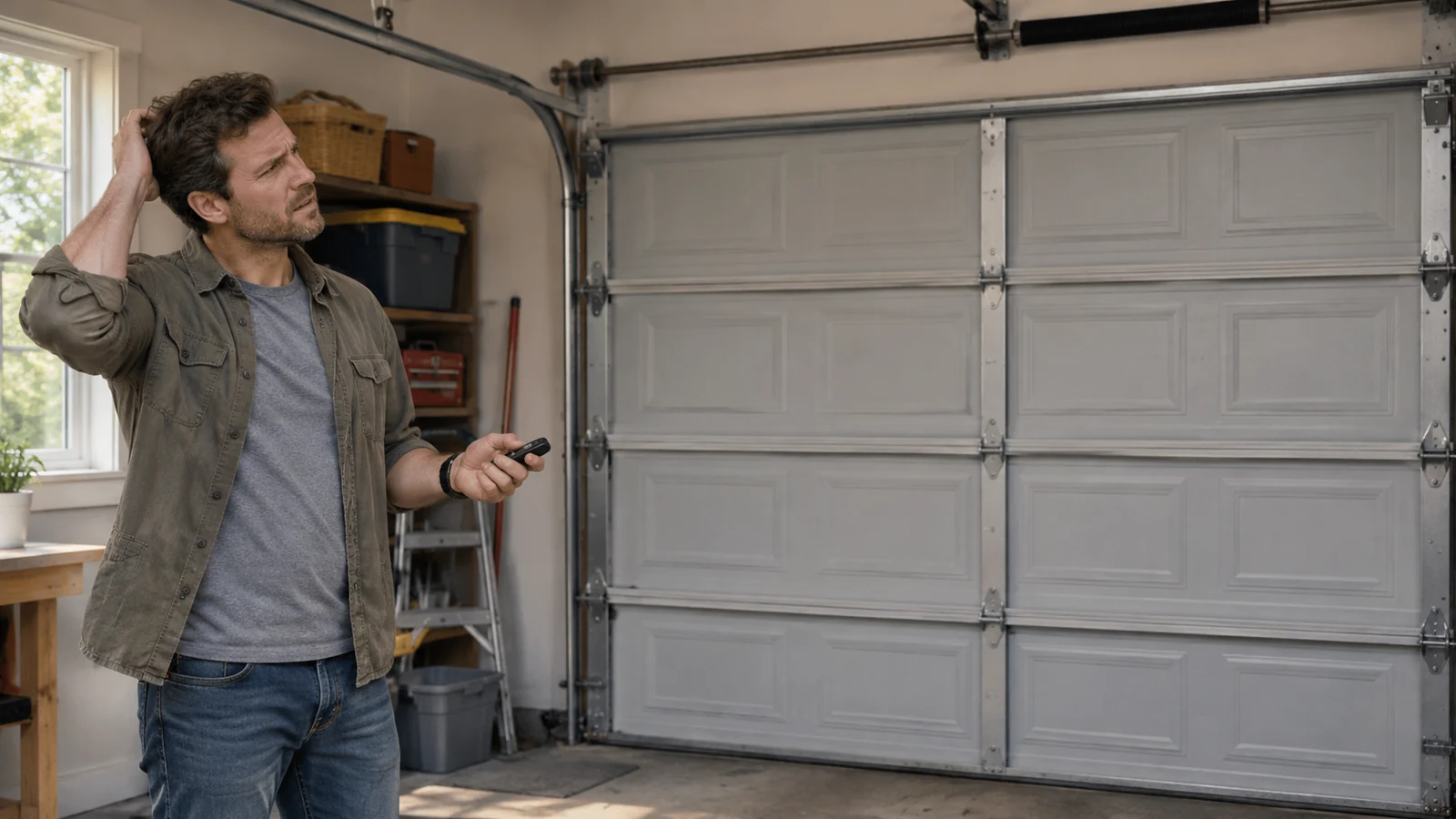
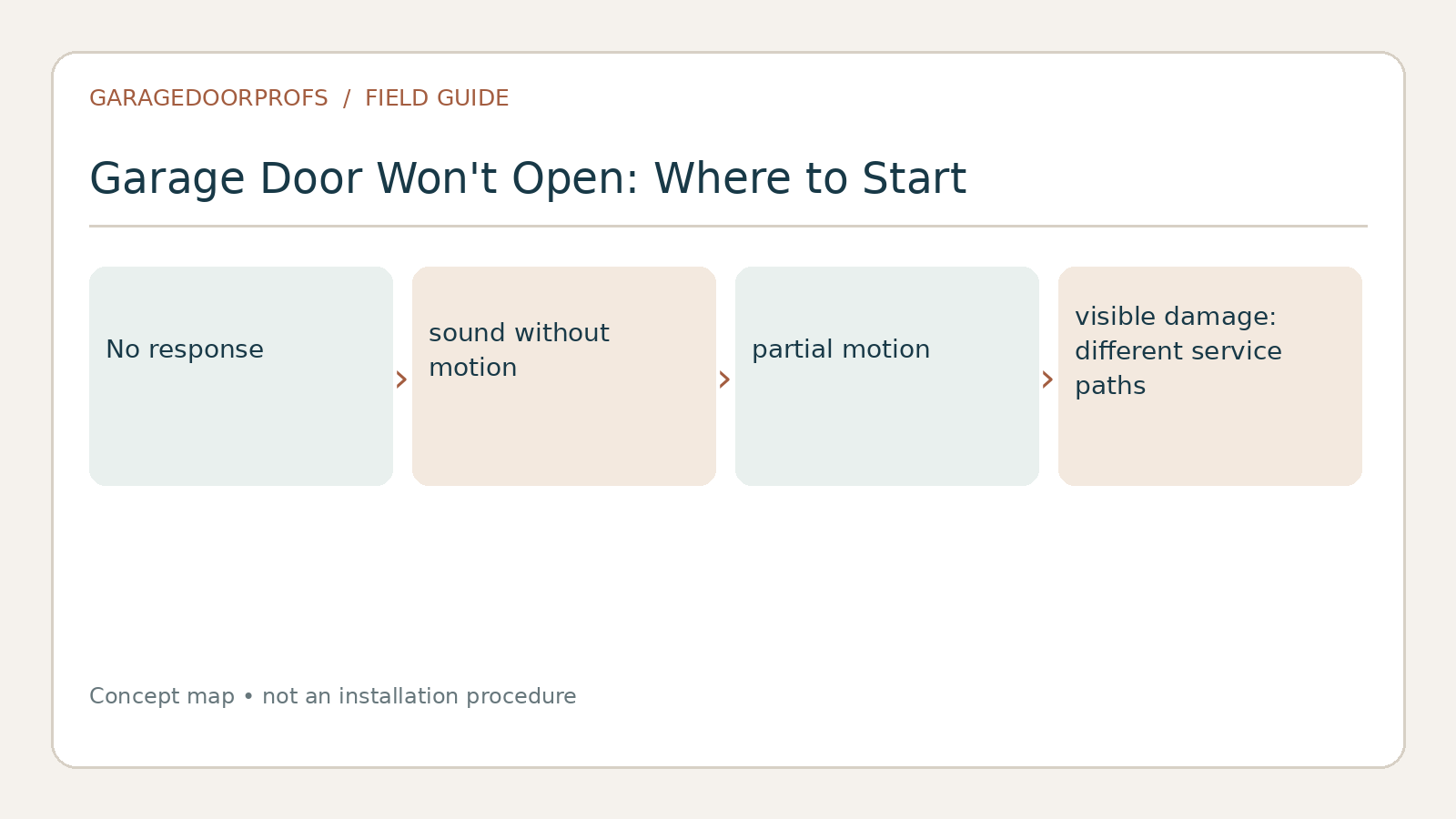
If your garage door won’t open, stop pressing the button and note the first clue: no response at all, a motor that runs but nothing moves, a door that starts and stops, or a door that hangs crooked. On a sound, closed door you can check power, the wall control, and a remote battery. A broken spring, slack cable, off-track roller, or a door stuck part open is a stop-and-call situation. As of November 2026, a service call typically runs about $50 to $150.
This page is part of the larger garage door troubleshooting guide, which covers the full range of symptoms.
When to call a pro. If the door is crooked, partly open, unusually heavy, or you saw or heard a spring or cable fail, do not try to lift it, pull the emergency release, or run the opener again. Keep people and vehicles clear and call a technician.
Contents
- Read the symptom first
- Safe checks on a sound, closed door
- Motor runs but the door does not move
- Door starts, stops, or moves crookedly
- Symptom guide
- When you need to get a car out
- What a service visit costs
- What to tell the repair company
- Quick checklist
- In this guide cluster
- DIY or pro
- Where these price ranges come from
- FAQ
- Next step
Read the symptom first
Resist the urge to keep pressing the button. Repeated attempts can strain an opener, and if the door is damaged they can make things worse. Instead, spend a minute collecting evidence:
- What do the controls do? Compare the wall control, a remote, and a keypad. If they all behave the same, the problem is probably the opener or the door. If only one fails, suspect that control.
- What do you hear? Silence, a hum, a click, a grinding sound, or a loud bang each point to a different starting place.
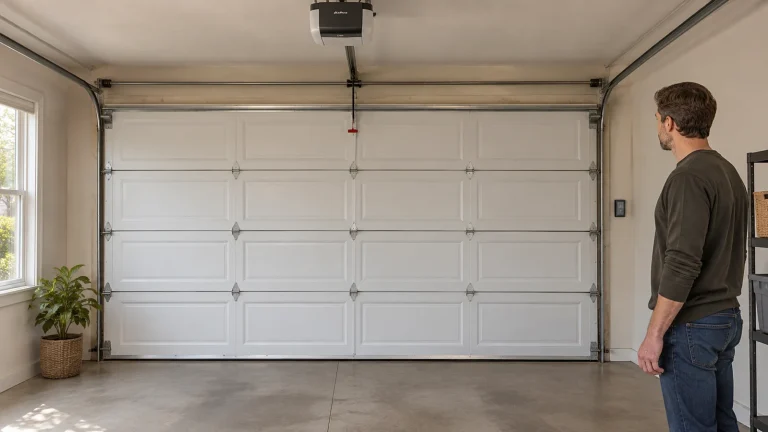
- What does the door look like? Fully closed, partly open, tilted, or stuck near the top? Look from the floor, not from under it.
Write down what you notice, along with whether it began after a power cut, a storm, an impact, or recent work. That sequence is what a technician uses first.
If the door is partly open, keep people and vehicles away from its path. A door held up by a damaged counterbalance can drop or shift. If you can do so without standing under it, take a photo for the technician.
Safe checks on a sound, closed door
If the door is fully closed, level, and moved normally the last time you used it, you can try a few simple things. Stop at any point where the door strains, tilts, or makes an unfamiliar noise.
- Check that the opener has power. Look at a light or indicator on the unit if it is easy to see from the floor. If the opener is plugged into an outlet you can reach without climbing, see whether another device works there. Do not climb to inspect it or open its housing.
- Look at the breaker panel. If a breaker has tripped, reset it once. If it trips again, stop and call an electrician or a garage door company.
- Try the wall control and a known-good remote, once each. Replace the remote battery if the remote is the only thing that fails.
- Check for lock or vacation mode. Many wall controls have a lock feature that blocks remotes. The opener manual explains how it works on your model.
- Look for an obvious obstruction at the threshold. Remove it from the side without stepping under a moving door.
Photo-eye sensors protect the closing path, so a blocked or misaligned sensor usually affects closing, not opening. A “will not open” symptom needs a wider look at the controls, power, and the door itself. Never bypass a sensor, change force or travel settings to push through resistance, or disconnect a safety device.
Motor runs but the door does not move
If you hear the motor hum or see the trolley move but the door stays put, there are several possible causes. The opener may have disconnected from the door, a drive part may have failed, or the door may be mechanically unable to move. Each is a different repair.
Do not pull the release cord until you know the door is sound, stable, and closed, and until the manual’s conditions are met. If a spring looks separated, a cable looks slack, or a roller has left the track, leave the system alone and call a technician.
Tell the company exactly what happens: a hum, a click, trolley movement, door movement, or nothing. If you can see a disconnected arm or a hanging part from the floor, take a safe photo without touching it.
Door starts, stops, or moves crookedly
Where the movement changes is useful evidence. A door that stops after a few inches, sticks at the same point each time, or shakes at a bend in the track points to a mechanical issue. A visibly crooked door, a missing roller, or a loose cable is a stop-use sign.
Do not push one side back into the track, pull the door down by hand, or run the opener again and again to work through the spot. A force setting is not a repair for binding hardware. Springs, cables, drums, bottom brackets, and track alignment are professional work.
Record the direction and approximate stopping point, and whether the problem followed a vehicle impact, panel repair, weather change, or outage. The track guide and the cable guide explain what these parts do so you can describe a problem accurately.
Symptom guide
| What you notice | What it may point to | What to do |
|---|---|---|
| No sound, no lights | Power, breaker, or opener failure | Check the outlet and breaker once; call if it persists |
| Remote fails, wall control works | Remote battery or pairing | Replace the battery; check the manual |
| Wall control fails, remote works | Wall control or wiring | Call a technician |
| Motor hums, door stays put | Disconnected drive or a stuck door | Do not pull the release on a damaged door; call |
| Loud bang, door feels heavy | Broken spring or cable | Stop use, keep clear, call a pro |
| Door stops after a few inches | Binding hardware or a safety trigger | Stop; do not force it; call |
| Crooked or tilted door | Off-track roller or cable failure | Keep clear; call a pro |
| Burning smell or smoke | Electrical fault | Stop using the opener and follow local emergency or electrical guidance |
Use the table as a guide for describing the problem, not as a diagnosis.
When you need to get a car out
If a vehicle is trapped, say so when you book. The company may prioritize the call or suggest another safe way to get access. Do not place a jack, pry bar, or person under a damaged door, and do not force the door to move while you wait. If the garage connects to your home, use another exit instead of working beneath the door.
If you see smoke, smell burning, or notice exposed wiring, stop using the opener and follow local emergency or electrical service guidance. Do not open the motor housing. For a routine power cut on a sound door, the owner’s manual explains any battery backup or manual release. A damaged door is a different situation, so leave the release alone.
What a service visit costs
As of November 2026, published cost guides put a garage door service call at about $50 to $150, and after-hours calls commonly add about 25 to 50 percent. A typical repair averages around $264, with most jobs between about $155 and $378. Typical ranges for specific parts are a spring at about $150 to $350 and a cable at about $150 to $350, according to published guides, though your quote depends on the door and the diagnosis.
The repair cost guide goes through repair costs in detail, and the guide to choosing a repair company explains how to compare estimates and what to ask before work starts.
What to tell the repair company
A clear report saves a visit. Tell them:
- Whether the door is fully closed or part open
- What each control does
- Whether the motor makes sound, and what kind
- Where travel stops, if it moves at all
- Any visible damage, such as a gap in a spring or a slack cable
- Whether a vehicle or person is blocked in
- Recent work, impacts, or outages
Share photos taken from a safe position if they ask. Once the repair is done, ask the technician to demonstrate normal travel and the opener’s safety checks, per its manual. Keep the invoice, which should separate door hardware from opener parts.
Quick checklist
- You stopped pressing the button and noted the symptom.
- You checked the door from a safe position and took photos if possible.
- On a sound, closed door, you checked power, the breaker, the controls, and any lock mode.
- You did not pull the release, lift the door, or force it open.
- You described the sound, the stopping point, and any visible damage when you called.
- A trapped vehicle or a suspected broken spring was mentioned at booking.
- You kept the invoice and the technician’s explanation of the cause.
In this guide cluster
- Garage door won’t close: safe checks first when the door will not come down.
- Garage door stops halfway: what the stopping point tells you.
- Closes then reopens after touching the floor: why a door reverses at the bottom.
- Stops and reverses before the floor: causes of reversal before the door closes.
- Opens then closes again: when a door reverses after opening.
- Will not open all the way: what limits travel at the top.
- Will not close all the way: what keeps it from seating on the floor.
- Opens slowly: reasons for sluggish travel.
- Closes too fast: why a door may drop quickly and why to stop using it.
- Moves in jerks or shakes: what uneven movement can mean.
- Opens crooked or unevenly: why one side may lead the other.
- Feels too heavy to lift: what a balance problem looks like.
- Will not stay open manually: why a disconnected door falls.
- Rises by itself when disconnected: what an over-balanced door means.
- Opens by itself while connected: possible control and signal causes.
- Closes by itself while connected: possible control and signal causes.
- Bounces when closing: what a rebound at the floor can mean.
- Gets stuck at the same spot: what a repeatable stop points to.
- Stops after a few inches: causes of a very short travel.
- Won’t open with a car inside: safe next steps when a vehicle is trapped.
- Open alerts: setting useful notifications.
DIY or pro
You can do the observing: note the symptom, take safe photos, check power and controls on a sound door, and prepare a clear report. The repair is for a trained technician whenever it involves springs, cables, drums, bottom brackets, tracks, or a door that is crooked or stuck part open.
Safety box. Do not pull the emergency release on a damaged door, lift a door by hand, or stand under it. Do not bypass a sensor, change force settings, or adjust travel limits to compensate for resistance. If anyone is trapped or injured, call emergency services first.
Where these price ranges come from
The ranges were compiled in November 2026 from published national cost guides and are not local quotes. The service call ($50 to $150), after-hours surcharge (about 25 to 50 percent), and repair average (about $264, most between roughly $155 and $378) come from national repair-cost guides. Spring and cable ranges come from This Old House, Angi, and HomeGuide. Safety references come from DASMA’s homeowner safety tips. Get local written quotes before you decide.
FAQ
Why does the motor run while the door stays closed?
Several causes are possible: a disconnected drive, an opener failure, or a door that cannot move safely. Do not pull the release on a damaged door or run the motor repeatedly. Note which parts visibly move from a safe place and call a technician to inspect both systems.
Can I pull the emergency release?
Only if the manual allows it and the door is sound, stable, and preferably fully closed. A door with a broken spring, loose cable, crooked section, or partial opening can move suddenly. In those cases, leave the release alone and get professional help.
Do the photo eyes stop the door from opening?
Photo sensors mainly protect the closing path on common openers. A door that will not open needs a broader check of power, controls, and the door’s condition. Never bypass a sensor, and do not assume an indicator light proves the whole system is safe.
What should I tell the repair company?
Say whether the door is closed or part open, what each control does, whether the motor makes sound, where travel stops, and any visible damage. Mention a trapped vehicle or a suspected broken spring right away, and share a photo taken from a safe position if asked.
Next step
- Stop pressing the button, note the symptom, and check power and controls only if the door is sound and closed.
- If you see or suspect a broken spring, loose cable, or crooked door, keep clear and call a technician.
- Ask for a written diagnosis and a demonstration of normal travel and safety checks before you pay.