Garage Door Spring Replacement: What the Job Includes
Garage door spring replacement is a professional repair, not a simple part swap. A technician identifies your door and spring system, selects matching springs, secures the door, installs the new springs, and then checks balance and safe travel. As of November 2026, published guides put the job at roughly $150 to $350 for a typical residential door. A homeowner’s job is to spot the warning signs, stay clear of the door, and read the quote.
This page is part of the larger garage door springs and cables guide, which covers the whole counterbalance system.
When to call a pro. Springs hold a large amount of stored energy. Do not touch, adjust, or try to replace a spring or the parts around it yourself. If you suspect a broken spring, stop using the door and keep people and vehicles clear.
Contents
- What the spring does
- Signs a spring may have failed
- What the job includes
- One spring or two
- Springs, cycles, and how long they last
- What the written estimate should say
- What it costs
- After the repair
- Quick checklist
- In this guide cluster
- DIY or pro
- Where these price ranges come from
- FAQ
- Next step
What the spring does
A garage door can weigh from roughly 125 pounds for a single door to around 500 for a large double, according to Angi. You can still lift it by hand because springs counterbalance most of that weight. The opener is not the counterbalance. It only guides a door that is already balanced.
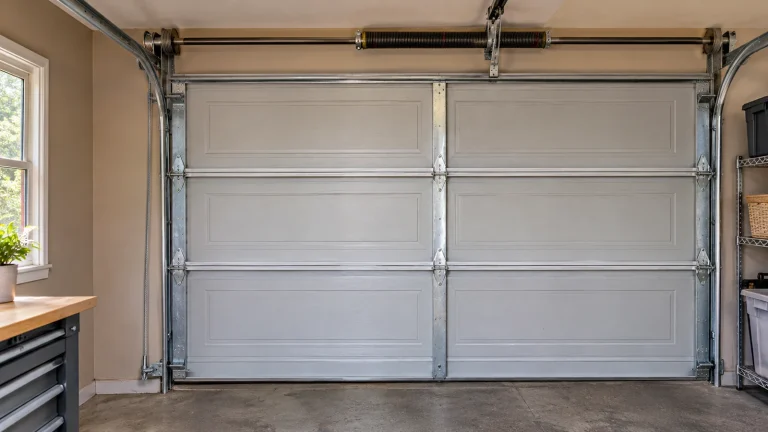
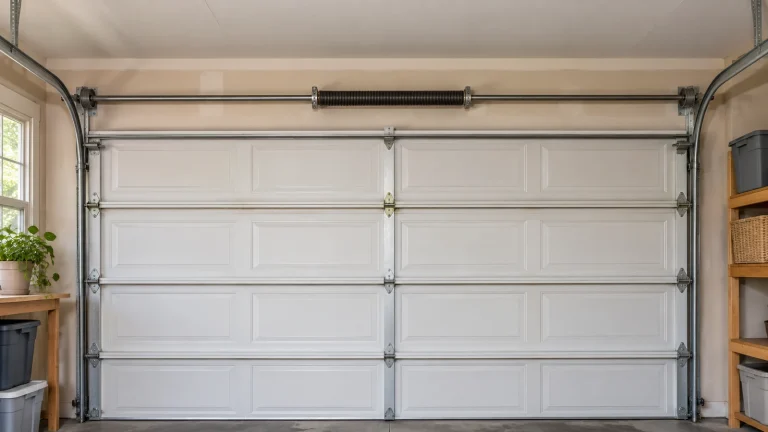
There are two common arrangements. Torsion springs sit on a shaft above the door opening and twist to store energy. Extension springs run alongside the horizontal tracks and stretch. Both store a lot of energy, and both can injure someone badly if mishandled. A visible coil alone does not tell you the spring’s specification or the right repair method, so the installer has to identify the system on your door.
Signs a spring may have failed
Look and listen from a safe position on the floor, without touching any hardware:
- A loud bang from the garage, often described as a gunshot sound.
- A visible gap in a coil above the door or along the track.
- A door that suddenly feels very heavy, or that the opener strains to move.
- The door rising unevenly or stopping after a few inches.
If you see any of these, stop using the door. Do not run the opener repeatedly, do not pull the release on a door that is crooked or part open, and do not climb up to look. DASMA’s homeowner safety tips cover the basic precautions. If a car is stuck inside, tell the company when you book so they can prioritize the call.
What the job includes
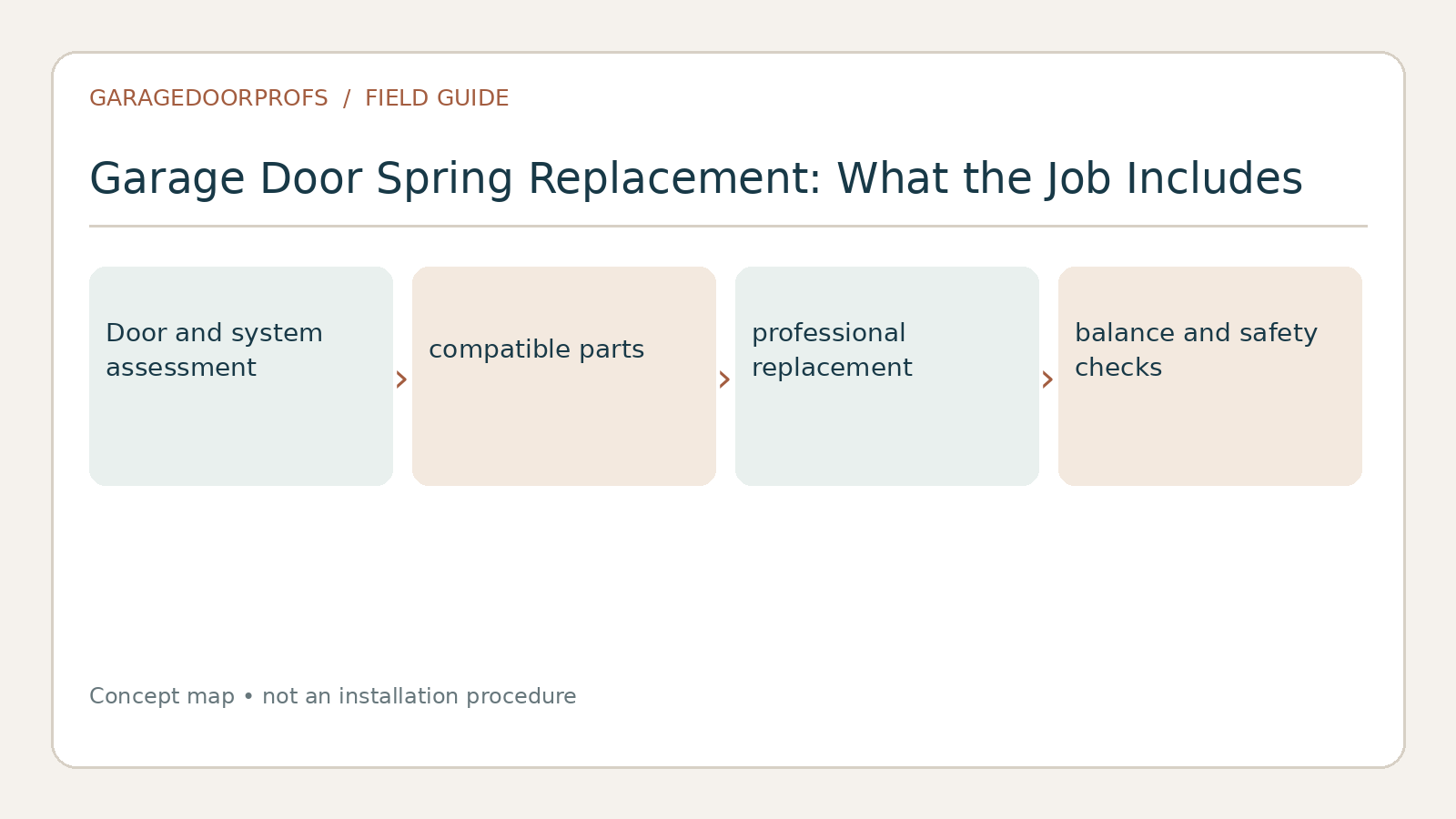
You should not need to know how the work is done. You should know what a complete job covers, so you can tell a proper quote from a partial one. A thorough visit typically includes:
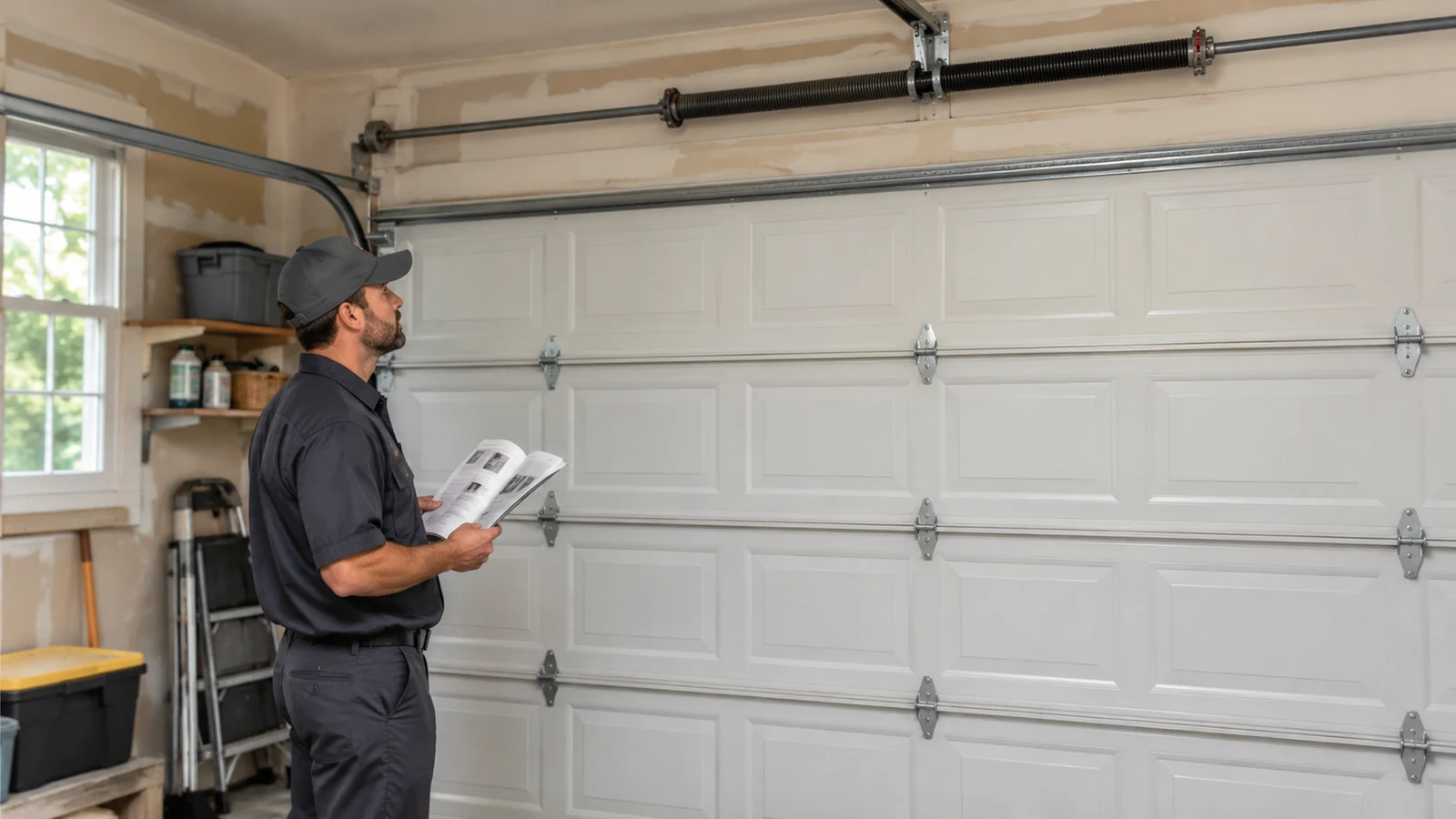
- Identifying the door and spring system. The technician determines the type of spring and the door’s weight and construction, rather than guessing from a photo.
- Inspecting related parts. Cables, bottom fixtures, bearings, the shaft, drums or pulleys, and the tracks are looked at because they work with the springs and can be worn or damaged by a failure.
- Selecting compatible springs. The right spring depends on the door’s weight and the hardware, not on color or a coil count alone.
- Making the replacement. Done by a trained technician with the proper tools and method.
- Balancing and testing. The door should move smoothly and stay where it is placed, and the opener’s reversing and sensor checks should be tested per its manual.
The job can reveal other worn parts. If the technician recommends more work, ask them to name the part, explain the defect, and put it on the estimate before they start.
One spring or two
Many doors have two springs. When one breaks, companies often propose replacing both. That can make sense, since springs of the same age and use wear at a similar rate, and a matched pair keeps the door balanced. But the right answer depends on the actual door and the condition of each spring.
Ask the technician to explain, in writing, why they are proposing one spring or two, and how the door will be balanced afterward. Compare the total price of each option and check whether a second visit might be needed later. The guide on replacing both springs goes into this more.
Springs, cycles, and how long they last
Springs are rated in cycles, where one cycle is one open and one close. Many standard springs are rated for around 10,000 cycles, and longer-life springs carry higher ratings. How many years that is depends on how often you use the door. A household that uses the door several times a day will reach the rating sooner than one that uses it once. HomeAdvisor says springs last between seven and 15 years.
When a quote offers a higher-cycle option, ask what it costs, what rating it carries, and how the warranty is written. A warranty stated in years and one stated in cycles are not the same promise. The warranty guide is useful if you are comparing offers. If you are curious about why a spring might fail early, such as corrosion or a very heavy door, see the spring rust guide.
What the written estimate should say
Do not approve spring work on a verbal price. A useful estimate lists:
- The spring type, number of springs, and their specification
- Any related parts being replaced, each with a reason
- Labor, service-call fee, and any after-hours charge
- Disposal and taxes, if they apply
- Warranty on parts and on labor, listed separately
- The tests the technician will perform before leaving
The Federal Trade Commission advises getting written estimates, not paying the full amount up front, and holding the final payment until you are satisfied. If the price changes at your door, ask for the new diagnosis in writing before you agree. The guide to choosing a repair company is a good companion. For the specifics of measuring a spring, a technician does that on site; the measurements guide explains what information they need from you.
What it costs
As of November 2026, published cost guides put spring replacement at about $150 to $350 for a typical door. Angi puts the average near $250. This Old House gives a wider range, $98 to $371, depending on spring type and door. Torsion springs usually cost more to replace than extension springs; one guide that draws on Fixr and HomeGuide lists about $200 to $350 installed for torsion and about $150 to $200 for extension.
Several things push the price up:
- A heavier door that needs stronger springs
- A higher-cycle spring option
- After-hours or weekend service
- A cable, bracket, or bearing that also needs replacing
- Converting from one spring system to another, which costs several times as much as a straight replacement according to one guide
For a full breakdown, see the spring replacement cost guide. The conversion guide covers the questions to ask before changing systems.
After the repair
Before the technician leaves, ask for a demonstration of normal travel from a clear position. The door should rise and lower evenly and hold position. Ask them to run the opener’s reversal and photo-eye checks as described in its manual.
Keep the invoice, which should name the parts installed, the labor, and the warranty. Photograph any accessible labels. Spring service is not a do-it-yourself maintenance item, so ask the technician how to keep up with the manufacturer’s schedule without touching tensioned parts. Owner checks should be visual and limited to a sound door. The spring maintenance checklist lists what you can look at safely.
If the door later jerks, rises unevenly, or becomes unusually noisy, stop using it and report the symptom. A spring repair can reveal another worn part, so ask that those findings be written on the invoice and not folded into the spring job.
Quick checklist
- You stopped using the door and kept people clear when you suspected a failure.
- You described the symptoms and any trapped vehicle when you booked.
- The estimate names the spring type, number, specification, labor, and fees.
- You know why one spring or two is proposed.
- Parts and labor warranties are listed separately, in years or cycles.
- The technician demonstrated normal travel and the opener’s safety tests.
- You kept the invoice and part details.
In this guide cluster
- Signs of a broken garage door spring: what to look and listen for from a safe spot.
- Garage door spring rust: when surface corrosion is cosmetic and when it is a warning.
- Should both springs be replaced together?: how a technician decides between one and two.
- Spring color codes: what the markings can and cannot tell you.
- Spring measurements: the information a technician needs to specify the right part.
- Spring conversion: questions to ask before changing spring systems.
- Spring replacement cost: what the job costs and why quotes differ.
- Spring maintenance checklist: visual checks that keep you clear of tensioned parts.
DIY or pro
You can do the observing and the paperwork: note symptoms, take photos from a safe distance, gather your door and opener model labels, and compare written estimates. The replacement itself belongs to a trained technician. Online part prices make the job look cheap, but Angi points out that the savings are small next to the danger of working with springs under tension.
Safety box. Never loosen, tighten, or remove a spring, a bracket, a drum, or a cable. Do not use the opener to pull a door with a suspected broken spring, and do not use the manual release on a door that is crooked, part open, or heavy. Keep children and pets out of the garage until the door has been repaired.
Where these price ranges come from
The ranges were compiled in November 2026 from published national cost guides and are not local quotes. They include This Old House’s spring cost guide, Angi’s spring replacement cost guide, HomeAdvisor’s spring cost guide, and a This Old House table that draws on Fixr and HomeGuide for torsion and extension prices. Spring life figures come from HomeAdvisor, and door weights from Angi. Where guides disagreed, the range here is wide enough to cover most of them. Get local written quotes before you decide.
FAQ
Can I open the door with a broken spring?
Do not use the opener to pull a door you suspect has a broken spring. It may be very heavy or move unevenly. Keep people away, avoid the emergency release on a damaged or part-open door, and call a technician. If you must get a car out, tell the company when you book.
Should both springs be replaced?
It depends on the system, the condition of each spring, and the technician’s inspection. Ask for a written reason for replacing one or both, and how the door will be balanced. Do not decide from the age of one spring alone.
Does the color of a spring identify the right part?
No. Color markings serve different purposes across spring types and makers. They are not a substitute for identifying the full door system and required specification. Let a qualified technician measure and verify the parts, then make sure the estimate lists what will be installed.
What should a spring warranty cover?
Read how the warranty separates the spring part, labor, service charges, and related parts. Ask whether coverage is stated in years, cycles, or both, and what conditions void it. Keep the invoice and part details so you can compare future service with what was promised.
Next step
- If you suspect a broken spring, stop using the door and call a technician. Tell them about any trapped vehicle.
- Ask for a written estimate that names the springs, parts, labor, and warranty, and compare it with a second quote if time allows.
- After the repair, keep the invoice and ask how to keep up with the maker’s maintenance schedule without touching the springs.