How to Choose a Garage Door Repair Company
To choose a garage door repair company, verify that it is a real local business, get the diagnosis and price in writing before work starts, and compare at least two itemized estimates. As of November 2026, a service call typically runs about $50 to $150, and published guides put an average repair near $265, with most jobs between about $155 and $379. A very low quote, pressure to decide on the spot, or a price that changes after the visit is a reason to pause. Springs and cables are professional work either way.
This page is part of the larger garage door repair guide, which covers symptoms, causes, and repair types.
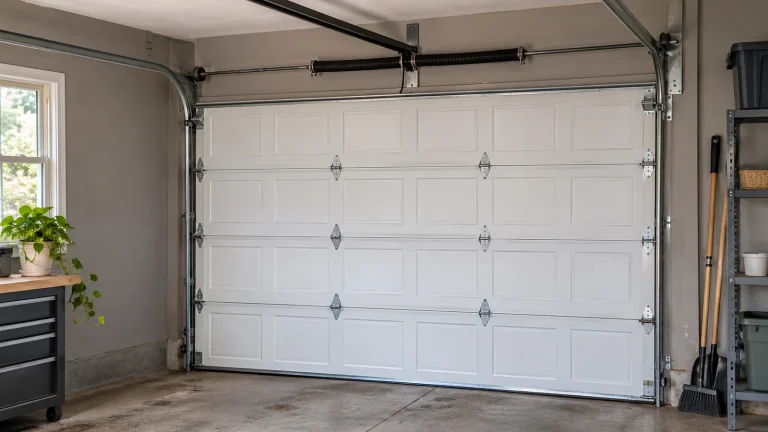
When to call a pro. If the door is off its tracks, hanging crooked, or has a broken spring or cable, stop using it and keep people and vehicles clear. Do not try to lift it or fix those parts yourself. Springs and cables hold dangerous tension, so a trained technician should handle them.
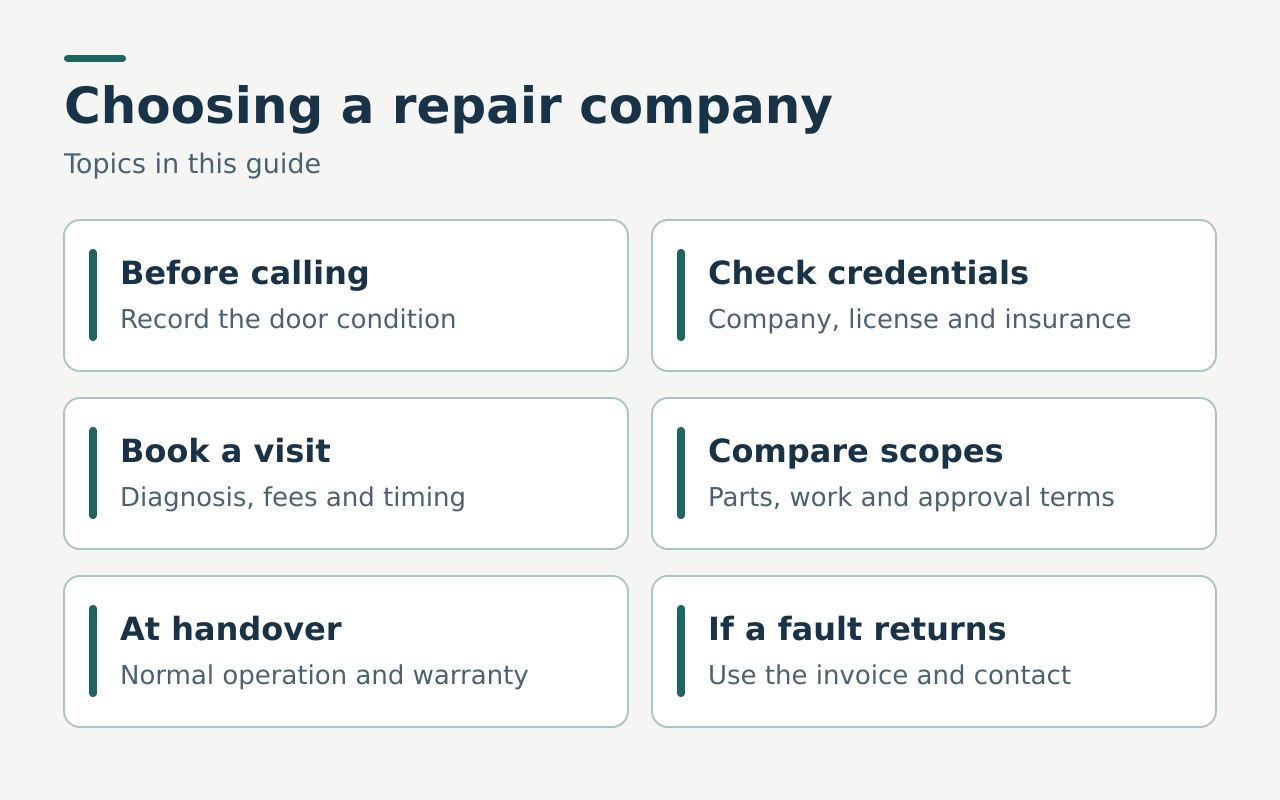
Contents
- Check that the company is real and local
- Confirm what the first visit will cost
- Get the diagnosis and scope in writing
- Compare estimates line by line
- Handover: what to expect when the work is done
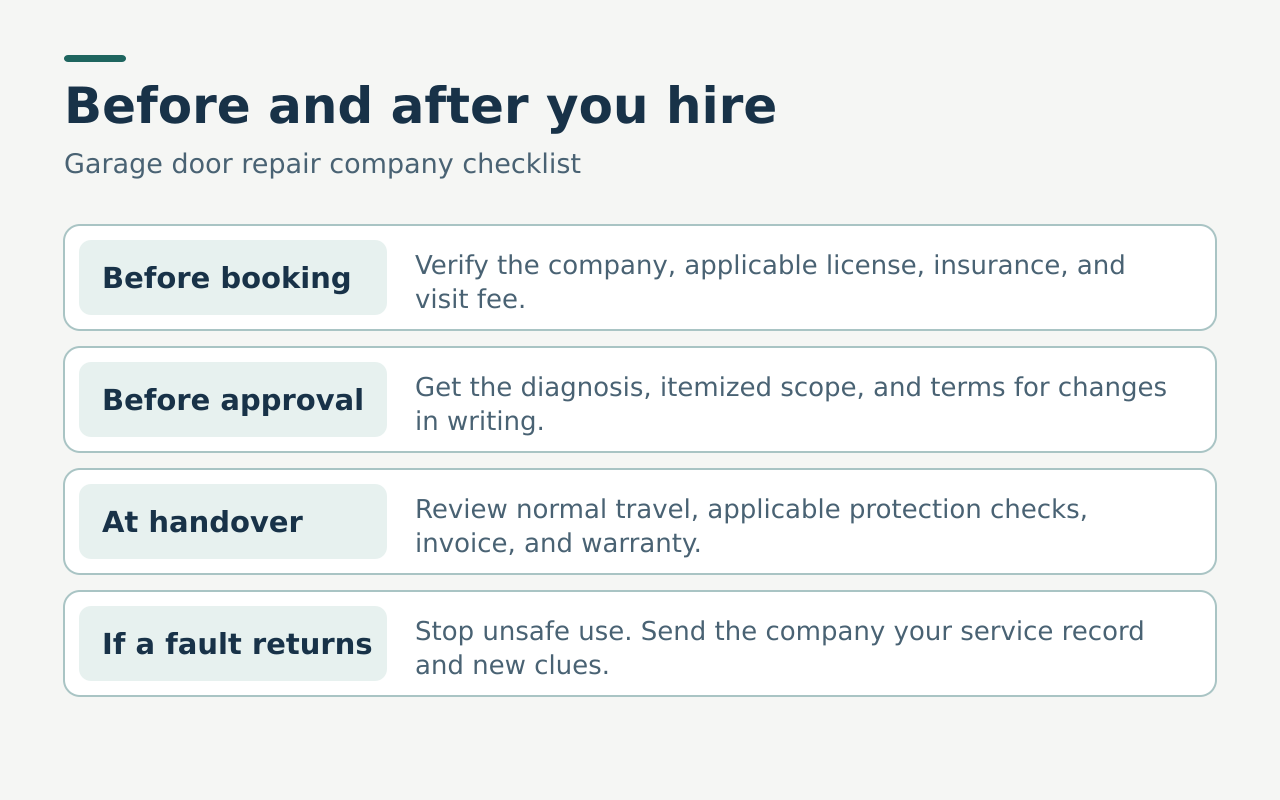
- Quick checklist
- In this guide cluster
- What you can do and when to call a pro
- Where these price ranges come from
- FAQ
- Next step
Check that the company is real and local
Start with the basics, since a broken door is stressful and that is when people skip checks. These take about ten minutes.
- A real name and address. The business name on the website, the phone greeting, the invoice, and the truck should match. Be cautious if the company answers with a generic phrase like “garage door service” and will not give its name.
- Contact details you can verify. Look for a local phone number and a physical address. Search the name and address together and see whether they point to the same place.
- License and insurance where required. Rules differ by state and city, so ask the company whether a license applies in your area and confirm it with your local licensing office. The Federal Trade Commission (FTC) advises contractors to be licensed and insured as required and says to ask for proof.
- Recommendations and complaints. The FTC suggests asking friends, neighbors, or coworkers for recommendations and checking with your local consumer protection agency for complaints.
- Trade association membership as a starting point. The International Door Association runs a dealer locator at doors.org. Membership can help you build a shortlist, but the page does not explain what membership requires, so treat it like any other credential and verify the rest yourself.
Be careful with ads that show a local name but route calls elsewhere. If you cannot confirm who will arrive, ask for the technician’s name and the company’s address when you book, and compare them with what shows up at your door.
Confirm what the first visit will cost
Ask three questions before anyone is dispatched.
- Is there a service call fee, and is it credited toward the repair? As of November 2026, published guides put a service call at about $50 to $150.
- Are there extra charges for evenings, weekends, or holidays? After-hours calls commonly add about 25 to 50 percent.
- Will you give me a written estimate before starting work? The answer should be yes, with no exceptions.
Write down the answers, the company name, and the arrival window. If the person who arrives is from a different company than the one you booked, or the quote on the phone changes before they have looked at the door, say so and consider calling another company.
If the door is stuck open or closed and you must secure the garage, say that when you book. A technician can often make the door safe first and explain the repair options afterward.
For a rough sense of what repairs cost, see the garage door repair cost guide. The ranges are a sanity check, not a promise.
Get the diagnosis and scope in writing
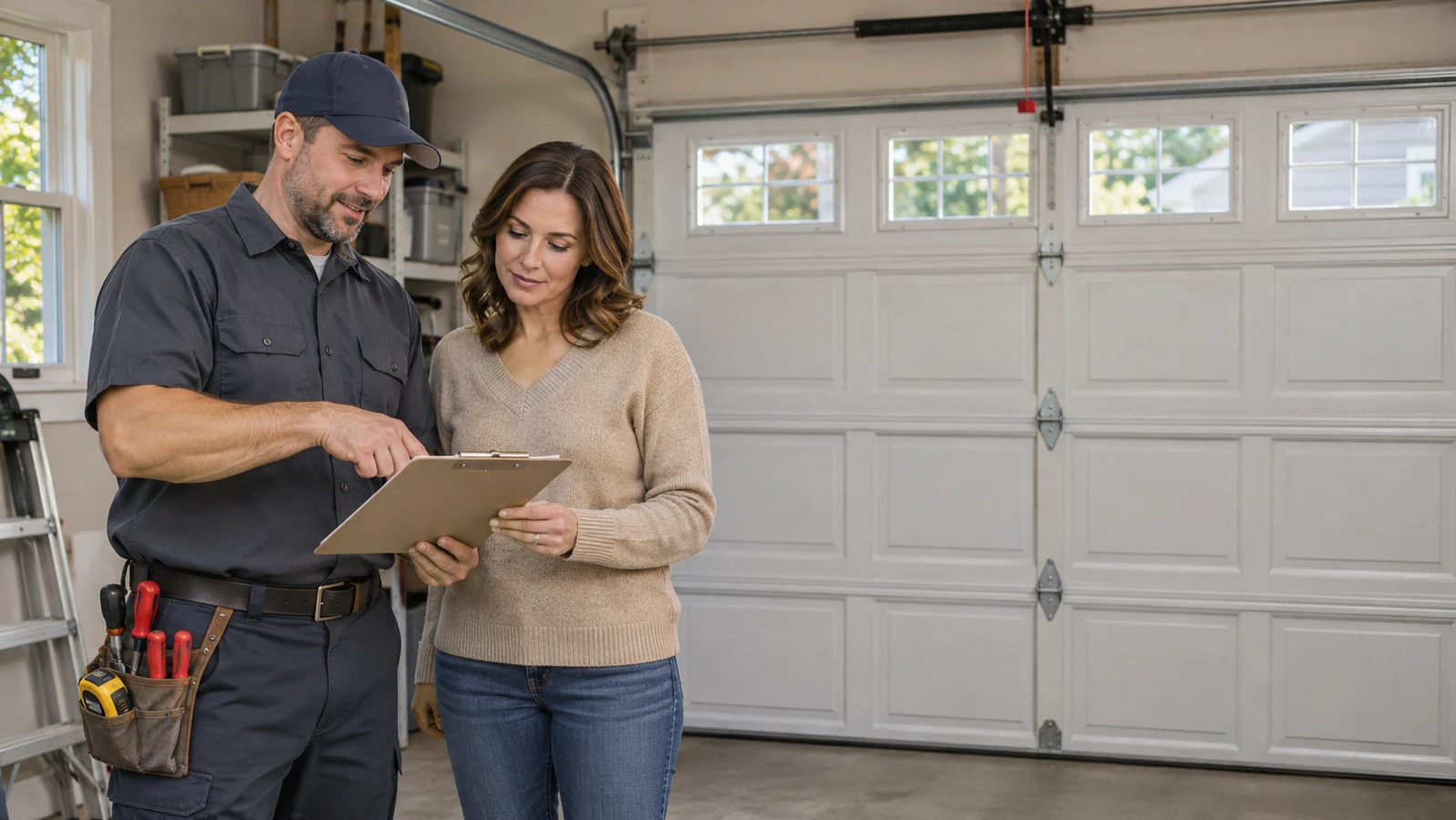
A good estimate explains what is wrong, what will be done, and what it costs. It should be specific enough that you could hand it to another company and ask for a matching bid.
Ask the technician to put these items on paper:
- What failed and why. For example, “right-side lift cable has frayed and slipped off the drum” is more useful than “door needs work.”
- Parts and labor, listed separately. Parts should be named, and used or reconditioned parts should be marked as such.
- Related parts. If a technician says springs or cables should be replaced as a pair or as a set, ask them to explain why, and to note the reason on the estimate.
- The total, including taxes and fees. Ask whether the number can change, and under what conditions.
- Warranty on parts and labor. Ask how long each lasts and what voids it.
- Start and finish timing. Especially if parts must be ordered.
The FTC advises that a written contract include the contractor’s name, address, phone number, and license number where applicable, the start and finish dates, and any verbal promises. It also says there should be no blank spaces, and it recommends not paying the full amount up front.
Be careful if the technician will not write the diagnosis down, or if the first answer is “everything needs replacing” without an explanation. Warning signs the FTC lists for home improvement work include pressure to decide immediately and requests for large upfront payments. The repair scams guide lists patterns to watch for.
If the estimate is large, or the explanation does not fit what you saw, a second opinion can be worth a service-call fee. The second opinion guide explains how to ask for one without starting over. Photos can also help other companies give a rough view of the problem, and the estimate photos guide shows which photos to take from a safe distance.
Compare estimates line by line
If time allows, get two or three estimates for the same work. The FTC advises against picking the lowest bid automatically and suggests asking why estimates differ.
When you compare, check:
| What to compare | What to look for |
|---|---|
| Diagnosis | Do the companies identify the same failed part? |
| Parts | Same type and quality, new or used? |
| Labor | Hours or flat price, and what it includes |
| Fees | Service call, after-hours, disposal, taxes |
| Warranty | Length, coverage, and who honors it |
| Timing | When parts arrive and when work is done |
Typical ranges help you notice a quote far outside normal. As of November 2026, national ranges for common jobs are approximately: a single panel $250 to $1,000, a general repair $150 to $400, and a spring replacement $120 to $350 (labor included). These vary by region and door, so treat them as a rough guide.
A much lower bid may leave out parts, labor, or the warranty. A much higher bid may include work the other company did not recommend. In both cases, ask the company to explain the difference and put the answer on the estimate.
If a company’s price changes at your door without a new written diagnosis, or if the work grows beyond the estimate, ask the technician to stop and explain before you agree. You do not have to approve extra work on the spot. The FTC also notes that if you sign a contract at home, you typically have three business days to cancel in many situations, but ask the company how that applies to emergency service.
Ask about the warranty before you hire, not after. The repair warranty guide covers what a parts and labor warranty typically spells out.
Handover: what to expect when the work is done
Do not pay the final balance until you are satisfied. The FTC advises holding the final payment until the work is done to your satisfaction.
Before the technician leaves:
- Compare the work with the estimate. Parts, labor, and fees should match the written scope. Any change should be written down and agreed.
- Watch a normal cycle from a clear spot. Ask the technician to open and close the door and explain what they adjusted. Stay out of the door’s path.
- Ask about the opener’s safety checks. The technician should show that the door reverses and the photo eyes work, using the opener manual and a working door. Never disable or bypass a safety feature.
- Get the paperwork. Keep the itemized invoice, the warranty terms, the company’s contact details, and a note of the parts replaced.
- Ask what to watch for. Ask which noises or movements are normal, and which mean you should stop using the door and call.
Afterward, the after-repair checklist shows what to check in the first days and what to report back to the company. If something is not right, contact the company in writing and keep the door out of use until it is checked.
Quick checklist
- The company has a real name, a local address, and a phone number that matches what you found online.
- You asked about the service call fee and any after-hours charge before booking.
- You will receive a written diagnosis, a parts and labor breakdown, a total, and a warranty statement before work starts.
- You compared at least two estimates when time allowed, and asked why they differ.
- No one asked you to pay everything up front or decide on the spot.
- You will hold the final payment until you have seen the door run and checked the paperwork.
- You kept the invoice, the warranty terms, and the company’s contact details.
In this guide cluster
These companion guides cover each step in more detail.
- Garage door repair scams: common tactics, red flags, and what to do if a quote feels wrong.
- Second opinion on a garage door repair: when a second visit is worth it and how to ask for one.
- Garage door repair warranty: what parts and labor coverage usually includes and how to read the terms.
- Garage door repair estimate photos: which photos help a company assess the problem from a safe distance.
- Prepare for garage door repair: how to clear the area and gather information before the technician arrives.
- After garage door repair checklist: what to check and keep once the work is finished.
- DIY garage door repair: which small checks homeowners can do safely and which repairs are professional work.
What you can do and when to call a pro
You can do the checking: verify the business, gather your door and opener model details, take photos from a safe distance, compare written estimates, and watch the handover from a clear spot.
A trained technician should do the repair itself. That includes springs, cables, drums, bottom brackets, track work, and anything that involves lifting or supporting the door. These parts hold tension that can cause serious injury, and no hiring checklist changes that.
Safety box. If the door is stuck, crooked, or has a broken spring or cable, do not use it, do not stand under it, and do not try to force it. Keep children and pets away. If someone is trapped or hurt, call emergency services first. When you call a company, say clearly what you see so the technician can arrive prepared.
Where these price ranges come from
The ranges were compiled in November 2026 from published national cost guides and are not local quotes. The service call range ($50 to $150), the after-hours surcharge (about 25 to 50 percent), and the repair average (about $265, with most repairs between roughly $155 and $379) come from HomeAdvisor’s repair-cost guide and other national repair-cost guides. The job ranges for a panel, a general repair, and a spring come from this site’s garage door repair cost guide. Contractor guidance comes from the FTC’s home improvement guide and the IDA dealer locator. Get local written quotes before you decide.
FAQ
How many estimates should I get for a garage door repair?
Two or three, when the door is safe to leave alone for a day or two. Give each company the same description or photos and ask for the same written details. The FTC advises asking why estimates differ instead of automatically choosing the lowest.
Is a service call fee normal?
Yes. As of November 2026, published guides put a typical service call at about $50 to $150. Ask when you book whether the fee is credited toward the repair, and whether evenings or weekends cost more, since after-hours work often adds about 25 to 50 percent.
Should I pay a deposit or the full amount up front?
Ask for a clear reason and get it in writing. The FTC advises not paying the full amount before the work is done and holding the final payment until you are satisfied. For a simple repair, a small or no deposit is more reasonable than a large one.
What should be on the written estimate?
The company name, address, and phone, what failed, parts and labor listed separately, the total with fees and taxes, warranty terms, and timing. The FTC adds that a contract should name the license number where one applies and should have no blank spaces.
Can I check the repair myself afterward?
You can watch a normal open and close cycle from a clear spot and compare the work with the invoice. Ask the technician to demonstrate the opener’s safety checks from the manual. Do not test or adjust springs, cables, or brackets yourself.
Next step
- Pick two companies, confirm their names and addresses, and ask each about the service call fee before booking.
- Ask for a written diagnosis, a parts and labor breakdown, and the warranty terms before any work starts.
- Keep the invoice and warranty, and hold the final payment until you have watched the door run safely.